


Quick answer: AI improves UX when it removes steps from a real user journey — think conversational ordering, smart defaults and personalised recommendations — not when it is bolted on as a chatbot for its own sake. Adding a focused AI feature to an existing app in Qatar typically costs QAR 40,000–120,000 depending on the model work involved, and it must speak Arabic as well as it speaks English.
AI in UX is not about bolting a chatbot onto the corner of a screen. At Hirodots, the artificial intelligence we are proudest of is the kind users barely notice — it removes a step, answers a question before it is asked, or turns something hard into something instant. Two of our recent products show exactly what that looks like in practice.

What does an “intelligent interface” actually mean?
An intelligent interface uses AI to shorten the distance between what a user wants and what they get. In the Al Gharafa Bakery app, our AI Cake Maker lets a customer describe a cake in plain words — or upload a picture — and see a realistic design in seconds, before they order. The customer never thinks “I am using AI.” They think “that was easy.” That is the whole goal.
How does AI reduce friction in a user journey?
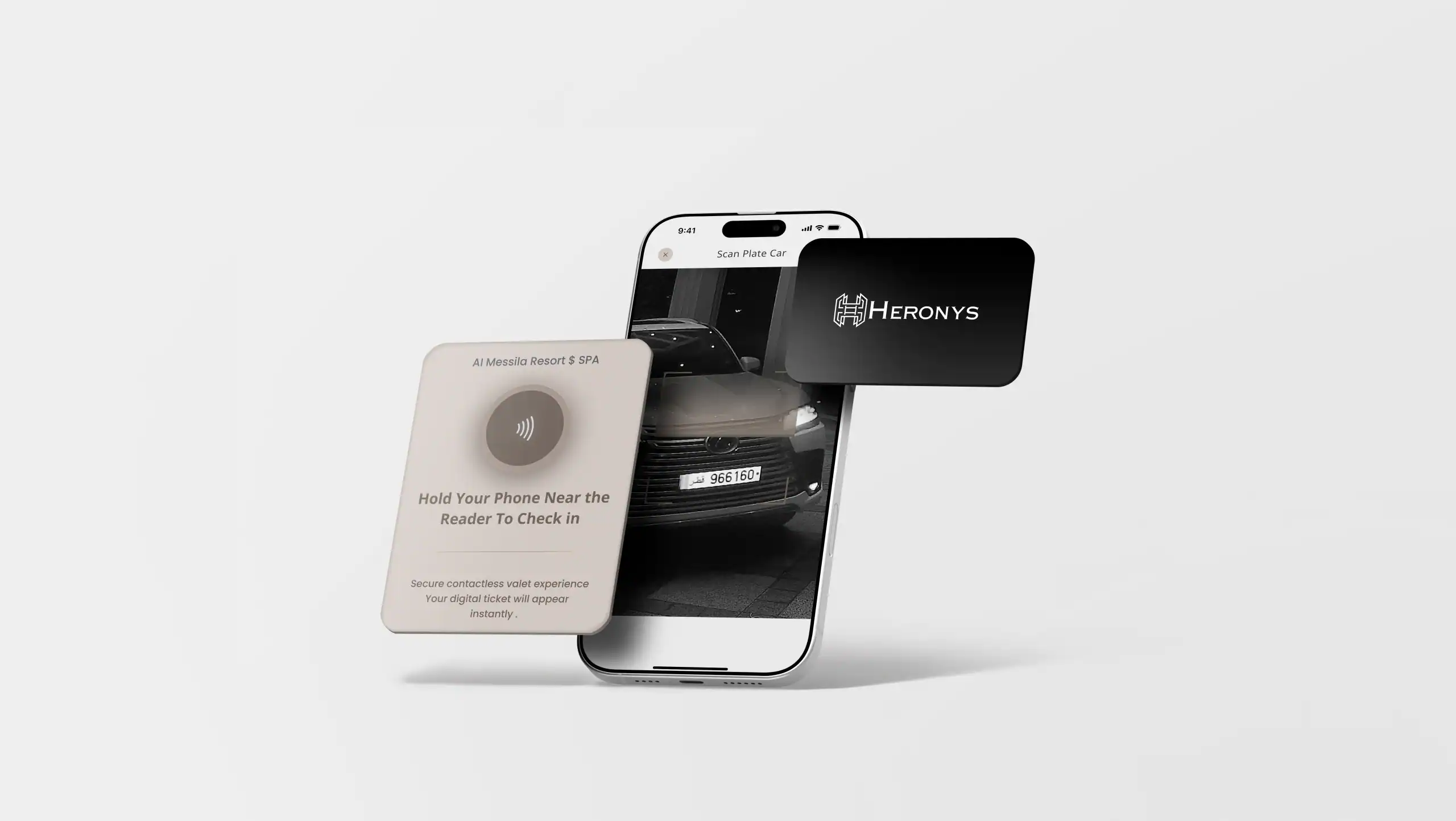
The old path to a custom cake was a phone call, a vague description and a lot of guessing. AI collapses that into a short, visual conversation with an instant preview. We apply the same principle in Heronys, our AI valet platform, where dispatching assigns the nearest available valet automatically — the guest simply waits less. In both cases AI removes the waiting, the guessing and the manual steps that used to slow everything down.
Where should AI stay invisible?
Good AI UX knows when to stay quiet. Behind Al Gharafa’s playful cake designer sits a production system that automatically organises and optimises orders, and behind Heronys sits smart resource planning — intelligence the user never has to see. The interface stays calm; the cleverness lives underneath.
The AI Cake option has been a game-changer, letting customers generate and customise their dream cakes through a simple conversation — making ordering faster, more engaging and highly personalised. The combination of great design and innovative AI has brought real value to our business.
Saoud Ali Al-Dossari — Owner, Al Gharafa Automatic Bakery
How we design AI that serves the user, not the demo
We always start with the friction, not the technology. AI and IoT only earn their place in one of our products if they make the journey measurably better for a real person using it. If you want to add intelligence to your product in a way customers will actually feel, our team in Lusail would be glad to help — [email protected].
Where AI actually earns its place in an interface
- Conversational creation — our AI Cake Maker for Al Gharafa Bakery lets customers describe the cake they imagine, in Arabic or English, and turns the conversation into a real order — replacing a phone call and a form.
- Predictive operations — in hospitality platforms like Heronys, AI prioritises and routes work so staff act instead of triaging.
- Smart personalisation — recommendations and defaults tuned to each user\u2019s history shorten every visit after the first.
What does an AI feature cost in Qatar?
Using API-based models (OpenAI, Gemini, or Arabic-capable models) keeps costs predictable: a focused AI feature added to an existing product typically runs QAR 40,000–120,000 at Hirodots, while AI-first products fall into the complex-app bracket (QAR 280,000+) of our 2026 cost guide. The recurring model usage cost is usually modest — the real work is UX design, Arabic-language quality and guardrails.
Frequently asked questions
How much does it cost to add AI features to an app?
A focused AI feature — a conversational assistant, smart search or a recommendation engine — typically costs QAR 40,000–120,000 to design, build and integrate at Hirodots. Fully AI-first products fall into the complex-app bracket starting around QAR 280,000.
Does AI work well in Arabic?
Modern large language models handle Arabic well, including Gulf dialects, but quality varies by task — so we test every AI feature in both languages before launch. The Al Gharafa AI Cake Maker takes customer requests in Arabic and English interchangeably.
Will an AI chatbot improve my app\u2019s UX?
Only if it removes steps from a journey users actually take. A chatbot that replaces a phone call or a long form improves UX; a chatbot floating over a website with no job usually hurts it. Start from the journey, not the technology.
How long does an AI feature take to ship?
A scoped AI feature on an existing product typically ships in 6–10 weeks including prompt engineering, Arabic–English testing and guardrails. AI-first products follow normal product timelines of 3–6+ months.


