


Quick answer: in 2026, a professionally built mobile app in Qatar typically costs QAR 55,000–110,000 for a simple cross-platform app (QAR 90,000–180,000 if built natively), QAR 120,000–250,000 for a mid-complexity cross-platform app (QAR 180,000–400,000 native), and QAR 280,000 or more for complex platforms with real-time, AI or IoT features. A cross-platform build usually costs 30–40% less than native because one codebase serves both iOS and Android. Add 15–20% of the build cost per year for maintenance.
Choosing between native and cross-platform development is usually the first — and most expensive — decision a business makes when planning a mobile app. In Qatar, where companies increasingly expect apps in Arabic and English, integrated with local payment and delivery services, the choice affects not just the initial build cost but years of maintenance. This guide breaks down what each approach really costs, when each one wins, and what to watch out for.
What is the difference between native and cross-platform development?
Native development means building a separate app for each platform: Swift for iOS and Kotlin for Android. Each app is written in the language the platform was designed for, with full access to device features and the best possible performance.
Cross-platform development means writing one codebase that runs on both iOS and Android, using frameworks such as Flutter or React Native. You build the app once, and it compiles for both platforms.
How much does app development cost in Qatar?
Every project is scoped individually, but these are indicative ranges for professionally built apps in the Qatari market:
| App complexity | Native (iOS + Android) | Cross-platform (one codebase) | Typical timeline |
|---|---|---|---|
| Simple app (MVP, core features, one language) | QAR 90,000–180,000 | QAR 55,000–110,000 | 2–3 months |
| Mid-complexity app (accounts, payments, notifications, Arabic + English) | QAR 180,000–400,000 | QAR 120,000–250,000 | 3–6 months |
| Complex app (real-time features, IoT, AI, multi-role platforms) | QAR 400,000+ | QAR 280,000+ | 6+ months |
The headline pattern: a cross-platform build typically costs 30–40% less than building two native apps, because most of the code is written once instead of twice.
Why is native development more expensive?
Native means two codebases, and often two developers or teams — one for iOS, one for Android. Every feature is built twice, tested twice, and maintained twice. Each new OS release needs to be verified on both sides. In return you get the best performance the platform can offer, first-day access to new OS capabilities, and the smoothest animations and interactions.
When is native worth the extra cost?
- Heavy real-time or hardware use: apps that lean on Bluetooth, NFC, cameras, sensors, or background services — for example IoT products or plate-recognition systems — benefit from native control.
- Performance-critical experiences: games, AR, video processing, or animation-heavy interfaces.
- Platform-specific products: if your audience is 90% on one platform, one native app may cost less than any dual-platform approach.
When is cross-platform the smarter choice?
- Business and consumer apps: booking, ordering, delivery, loyalty, and service apps rarely need native-level performance. Frameworks like Flutter render at 60fps and feel native to users.
- Tight budgets and deadlines: one codebase means faster delivery and a lower initial invoice.
- Easier maintenance: one team fixes a bug once, and the fix ships to both platforms at the same time.
What hidden costs should you budget for?
The build price is only part of the total cost of ownership. Whichever approach you choose, plan for:
- Backend and hosting: most apps need a server, database, and admin dashboard — commonly 25–40% of the total project cost.
- Annual maintenance: OS updates, security patches, and small improvements typically run 15–20% of the build cost per year. This is where native’s two codebases keep costing more, year after year.
- Store fees: Apple charges USD 99/year and Google a one-time USD 25 for developer accounts.
- Third-party services: payment gateways, SMS providers, and mapping services charge ongoing usage fees.
What matters specifically for apps in Qatar?
- Arabic and RTL support: a bilingual Arabic–English interface with proper right-to-left layouts should be planned from day one — retrofitting it later is far more expensive. Modern cross-platform frameworks handle RTL well.
- Local payments: supporting locally preferred payment methods and digital wallets adds integration work that should be scoped early.
- WhatsApp-centric customers: many Qatari businesses route orders and support through WhatsApp — integrating it into the app flow is often worth the small extra cost.
Native or cross-platform: which should you choose?
The right choice depends on what you are optimising for. This side-by-side view sums up the trade-offs:
| Criteria | Native (Swift / Kotlin) | Cross-platform (Flutter / React Native) |
|---|---|---|
| Upfront cost | Higher — two codebases | 30–40% lower — one codebase |
| Time to market | Slower — parallel builds | Faster — one team ships both stores |
| Performance | Best possible, ideal for heavy graphics | Near-native for most business apps |
| Device features (camera, sensors, background services) | Full, immediate access | Covered via plugins; rare edge cases need native modules |
| Long-term maintenance | Two codebases to update, year after year | One codebase — roughly half the ongoing effort |
| Best for | Games, AR/VR, hardware-intensive apps | Booking, e-commerce, delivery, service and SaaS apps |
Which cross-platform framework should you choose in 2026?
Flutter (Google) compiles to native code, renders its own UI for pixel-perfect consistency across devices, and has first-class right-to-left support — a real advantage for Arabic–English apps in Qatar. React Native (Meta) uses native UI components and is a natural fit when your team already works in JavaScript or you want to share logic with a web app.
For most bilingual consumer and business apps in the Qatari market, we find Flutter reaches a polished Arabic RTL interface with less custom work, while React Native shines when a product already has a React web codebase. Both are mature, well-supported choices — the bigger cost risk is not the framework but unclear scope.
How can you reduce your app development cost?
Five decisions consistently keep budgets under control without hurting quality:
- Start with an MVP: launch with the core journey only, validate it with real users, then fund the next phase from evidence rather than guesses.
- Choose cross-platform unless you have a specific native need: the 30–40% saving on the build compounds every year in maintenance.
- Phase your features: payments, loyalty and advanced analytics can ship in release two — a smaller first release means earlier revenue and feedback.
- Reuse proven components: authentication, notifications and admin dashboards do not need to be rebuilt from scratch.
- Invest in scoping and design first: a clear specification and tested prototype are far cheaper than rework in code.
How Hirodots approaches the choice
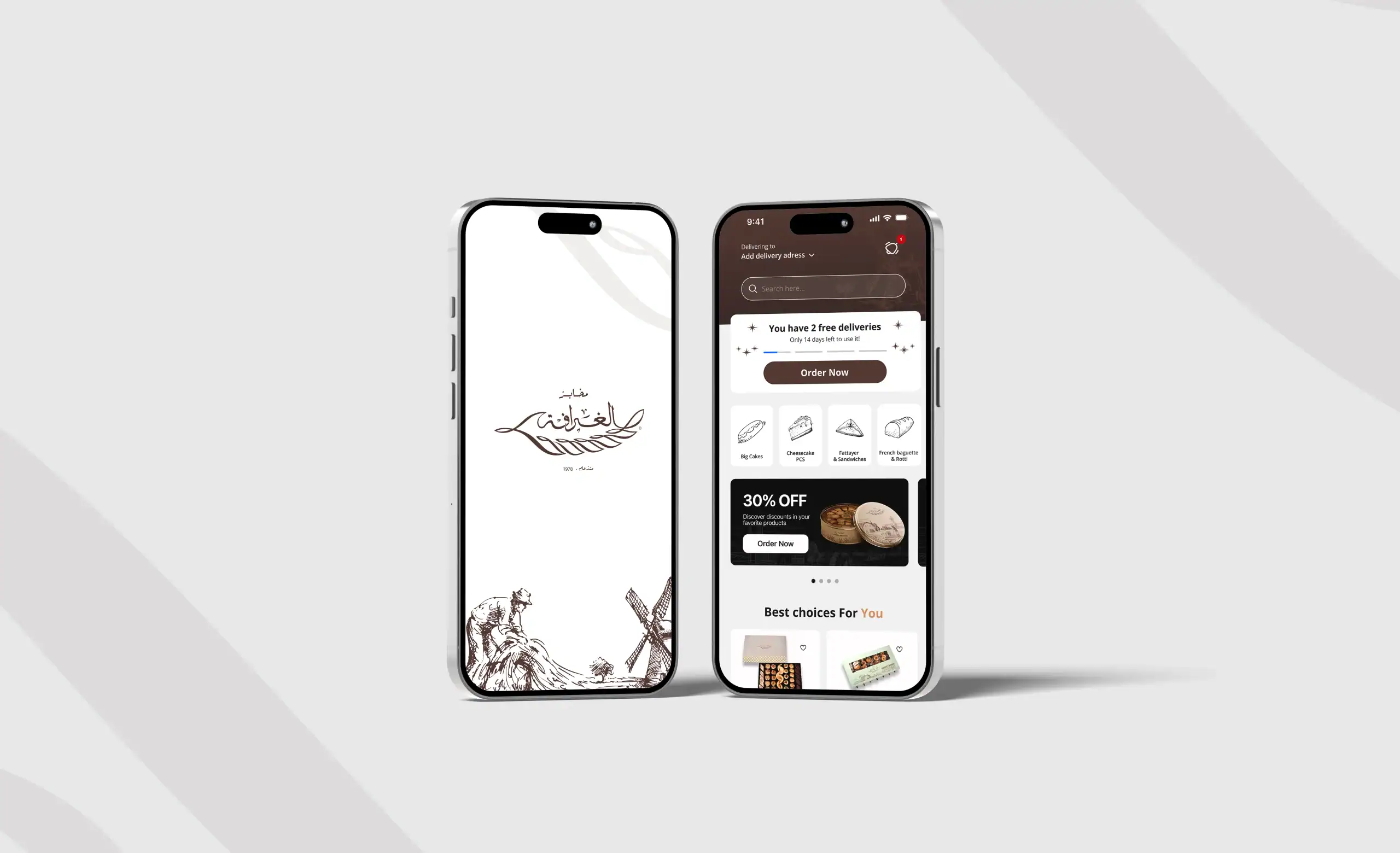
At Hirodots we build both. Our valet management system Heronys and the Al Gharafa Bakery ordering app both target iOS and Android, and in each case the architecture was chosen from the project’s actual requirements — not a default preference. Our rule of thumb: choose cross-platform unless a specific technical requirement demands native, and spend the savings on better design, testing, and launch support.

Planning an app for your business in Qatar? Talk to our team — we will scope both options and give you a clear, itemized comparison for your specific project.
Frequently asked questions
How much does it cost to build a mobile app in Qatar in 2026?
A simple app typically costs QAR 55,000–110,000 built cross-platform or QAR 90,000–180,000 built natively. Mid-complexity apps with accounts, payments and Arabic–English support run QAR 120,000–250,000 cross-platform (QAR 180,000–400,000 native), and complex real-time or AI platforms start around QAR 280,000.
Is cross-platform development cheaper than native?
Yes — usually 30–40% cheaper upfront, because one codebase serves both iOS and Android instead of two separate builds. The saving continues after launch: maintaining one codebase costs roughly half the ongoing effort of maintaining two.
How long does it take to develop a mobile app in Qatar?
A simple app takes around 2–3 months including design, development, testing and store launch. Mid-complexity apps take 3–6 months, and complex multi-role platforms 6 months or more.
Which approach is better for a bilingual Arabic–English app?
Both can deliver excellent Arabic RTL interfaces. Cross-platform frameworks like Flutter have strong built-in right-to-left support, which typically makes a bilingual interface faster and cheaper to build and test than maintaining it across two native codebases.
How much does annual app maintenance cost?
Plan for 15–20% of the original build cost per year. That covers OS updates, security patches, small improvements and keeping third-party integrations working. Native apps sit at the higher end because every change is made twice.
Planning an app for the Qatari market? Get a free consultation and a detailed quote, or see recent Hirodots projects.


