


Quick answer: Smart-city UX succeeds when residents stop noticing it: one sign-in across services, Arabic and English as equals, and interfaces that work in sunlight on a phone. Qatar is a live laboratory for this — from Lusail\u2019s city-scale infrastructure to the TASMU Smart Qatar programme — and the design principles below come from building connected products for exactly this environment.
When people imagine smart cities, they picture traffic grids and sensors. In practice, the connected city shows up first in everyday services — parking, hospitality, logistics — where the physical world meets software. At Hirodots, this is exactly the space we design for, and our AI valet platform Heronys is a clear example of what a connected experience looks like in Qatar today.
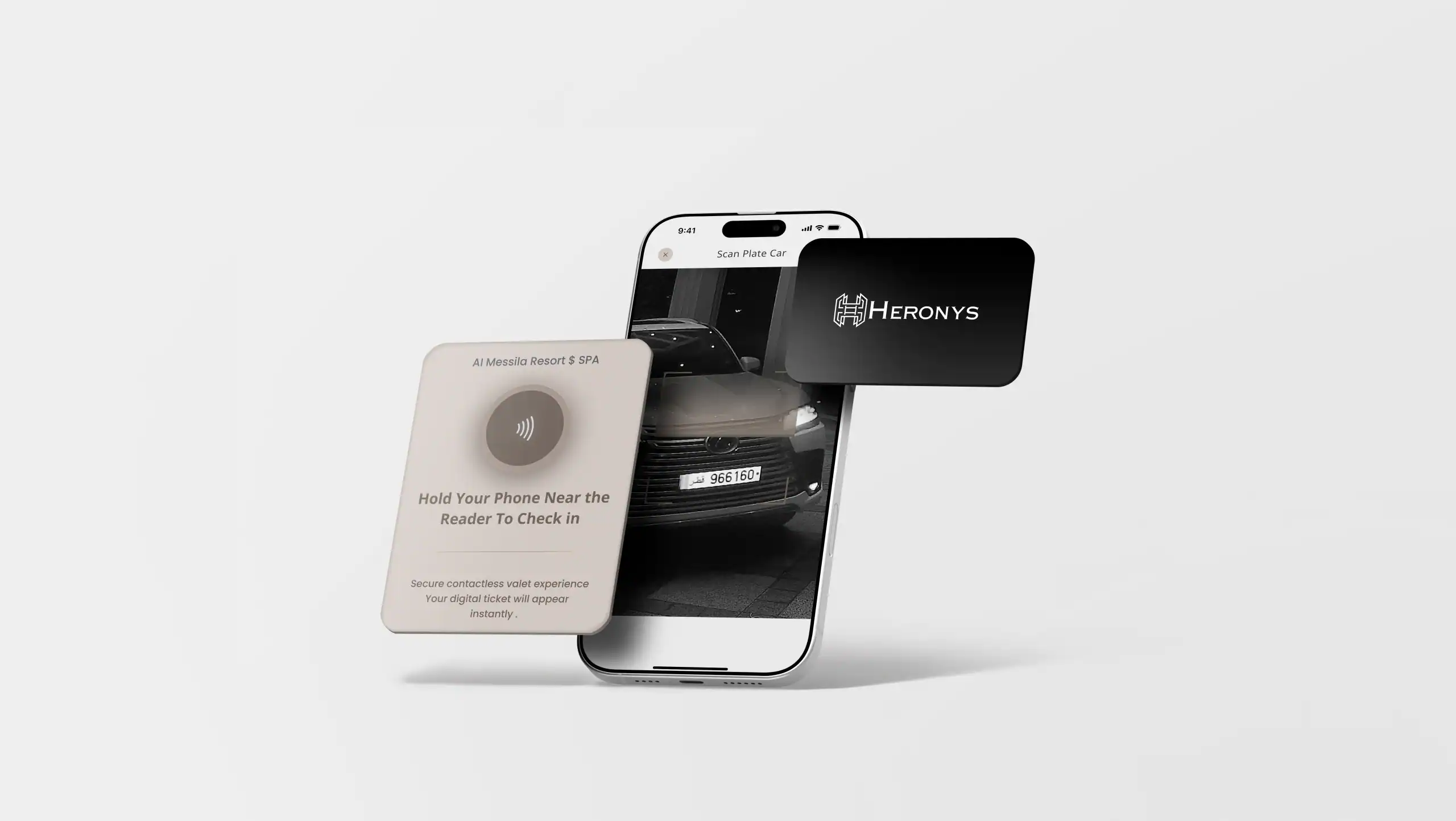
What is a connected experience, really?
Heronys is an AI-powered valet management system that replaces slow paper tickets with a fully digital flow: guests check in through Apple and Google Wallet passes, vehicles are tracked in real time, and an AI engine dispatches the nearest available valet automatically. A single experience quietly links four things at once — the guest’s phone, the valet’s device, the manager’s dashboard, and the physical cars on the ground. Designing that is very different from designing a website.
Why does IoT raise the stakes for UX?
When software starts controlling things in the real world — a barrier, a wallet pass, a car being fetched — mistakes are visible and expensive. Building Heronys on IoT infrastructure, we designed for real-world latency, dropped connections and the handoff moment between guest and driver. Connected experiences have to be forgiving and instant at the same time, because the user is standing in a lobby, not sitting at a desk.
How does AI quietly improve the experience?
The smartest part of Heronys is the part guests never see. AI-driven dispatching assigns the nearest valet the moment a car is requested, cutting wait times and easing congestion at peak hours, while an operator dashboard turns live vehicle flow into decisions managers can act on. The best AI in a connected product is invisible — the guest simply notices their car arrives faster.
Designing for Qatar’s premium hospitality sector
Qatari hospitality sets a high bar, and guests expect service that feels effortless. We built Heronys to help hotels optimise daily parking operations, empower their staff with smarter tools, and deliver the premium, reliable experience their guests expect.
We are grateful to the Hirodots team for the realisation of the Heronys project. Given its complexity and the various IoT integrations involved, the outcome and the results we achieved clearly demonstrate the excellent work done by the whole team.
Ebrahim Rashed Al-Shriem — Office Manager, H.H. Sheikha Lolwa Al-Thani’s Private Office
Where connected experiences go next
Smart cities will be built one connected service at a time, and each one lives or dies on its user experience. If you are bringing an IoT or AI-driven service into the physical world and want it to feel effortless, our team in Lusail would love to talk — [email protected].
Why Qatar is a smart-city UX laboratory
Hirodots is headquartered in Lusail — a city designed digital-first, from district cooling to smart lighting — and Qatar\u2019s national TASMU programme is investing in connected transport, logistics, environment, healthcare and sport. For product teams this means real users interacting with connected services daily, in two languages, across extreme outdoor conditions: the hardest and best test bed a UX team can ask for.
Five rules we apply to connected-city products
- One identity — residents should authenticate once, not per service.
- Arabic-first parity — RTL layouts and Arabic content designed together with English, never translated as an afterthought.
- Sunlight and speed — high contrast, large targets and sub-2-second loads on mobile networks.
- Graceful offline — connected services fail; the interface should degrade, not die.
- Privacy legibility — city-scale data collection needs plain-language consent in both languages.
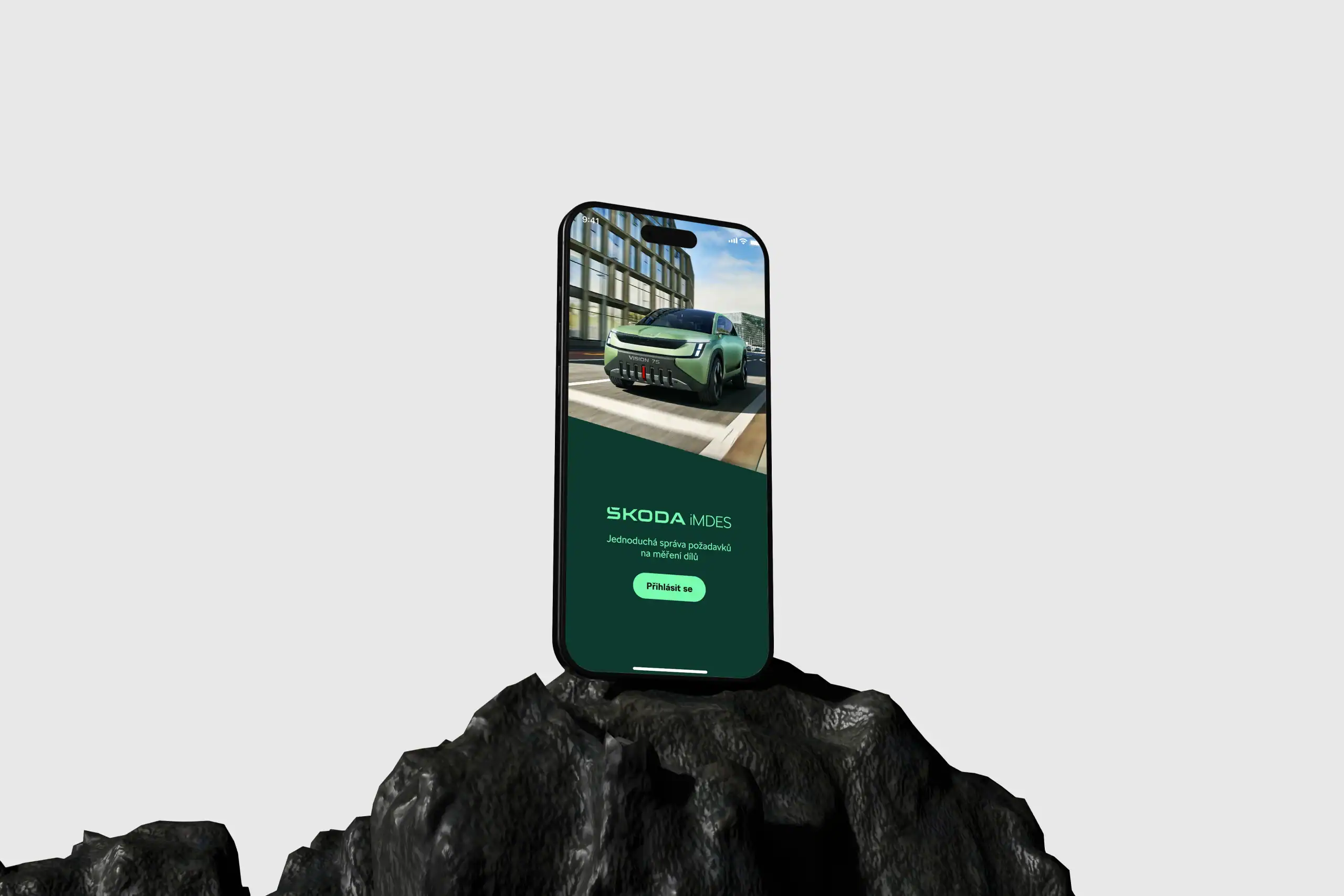
These same rules shape the IoT and operations products we build, like SKODA iMDES on the factory floor and XIONYS in hotels. Planning a connected product? Talk to our Lusail team.
Frequently asked questions
What is smart-city UX?
Smart-city UX is the design of the interfaces residents use to interact with connected urban services — parking, transport, utilities, permits and public spaces. Good smart-city UX makes the technology invisible: one login, both languages, and services that respond in seconds.
What is Qatar doing in smart cities?
Qatar runs one of the region\u2019s most ambitious programmes: Lusail was built as a digital-first city, and the national TASMU Smart Qatar initiative drives connected solutions across transport, logistics, environment, healthcare and sport.
How much does a smart-city or IoT app cost?
Connected products span the full range of our 2026 cost guide: a resident-facing service app starts around QAR 120,000, while platforms integrating live IoT data and real-time operations start around QAR 280,000 depending on integrations.
Why must smart-city interfaces be Arabic-first?
Because they serve every resident, not a self-selected app audience. Arabic speakers are the majority of many user groups in Qatar, and public services are expected — often required — to offer full Arabic parity, meaning true right-to-left design rather than translated screens.


