


Quick answer: For a SaaS product that needs to survive growth, start with a well-structured monolith, split services only when a real bottleneck appears, and design the API and database for multi-tenancy from day one. In Qatar and the GCC, also plan data residency early — hosting in-region (e.g. Google Cloud Doha or AWS Bahrain) is increasingly a procurement requirement.
A SaaS product lives or dies on the part users never see: the backend. At Hirodots we have built platforms that pull entire business operations into a single workspace, and the reason they stay fast as they grow is architecture we decide long before the first screen is designed.
What makes a backend genuinely scalable?
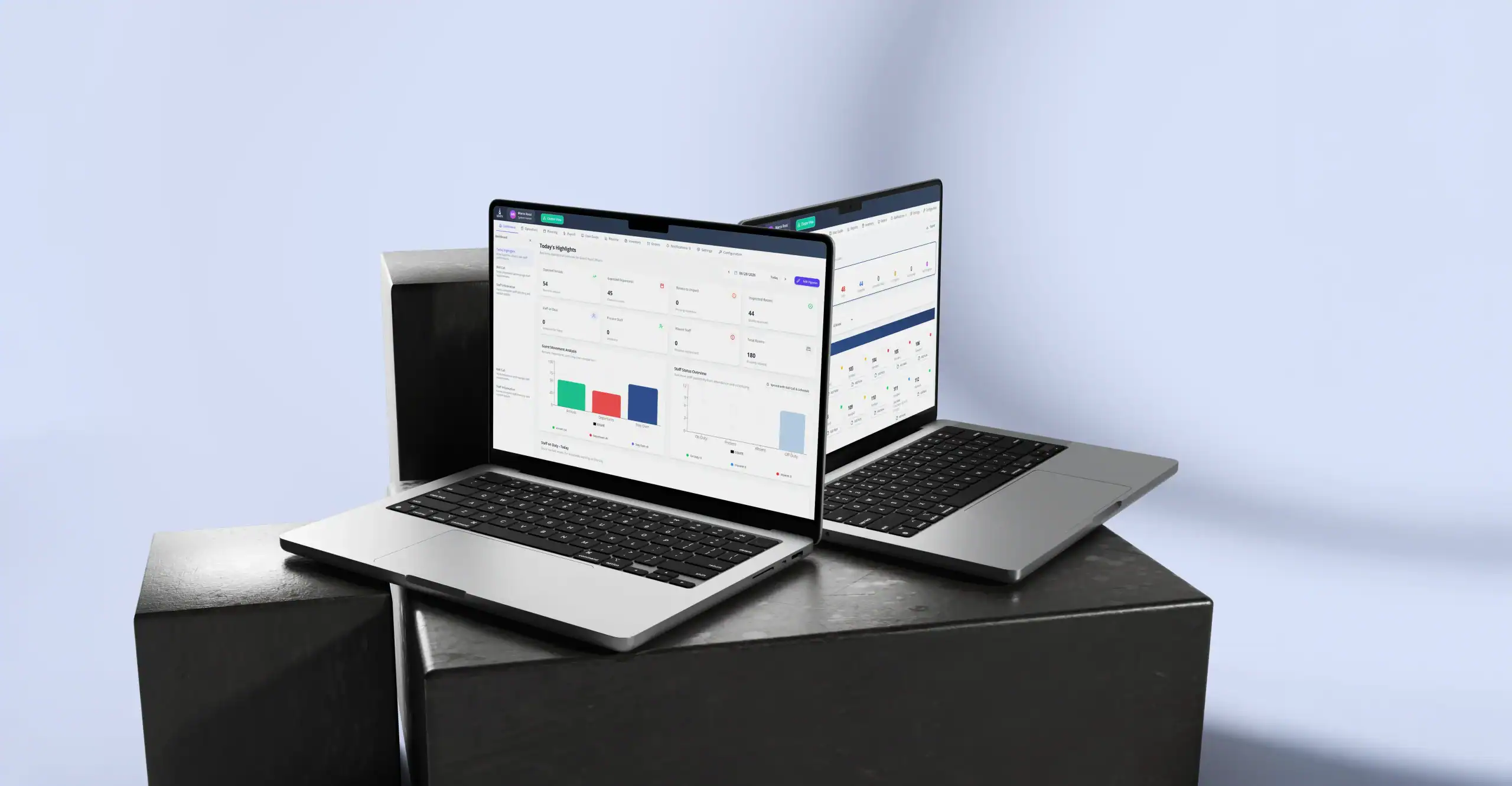
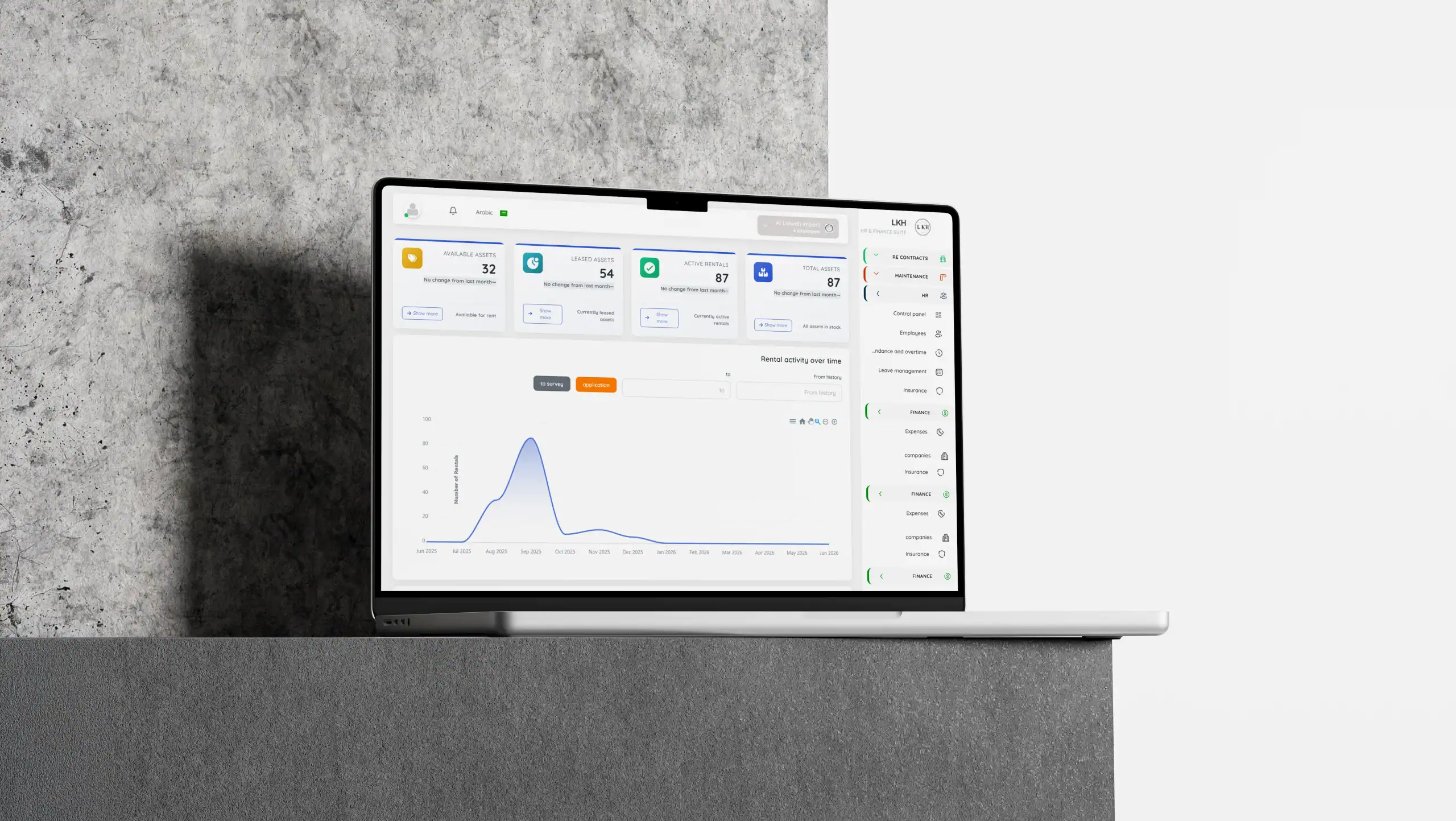
A scalable backend lets each part of the product grow without dragging the rest down. LKH, the HR & Finance Suite we built, unifies employees, leave, expenses, roles and permissions, and daily administration. Xionys unifies housekeeping, workforce, payroll, inventory, planning and analytics for hotels. In both, every module has to scale on its own — payroll should not slow down when inventory grows — which is why we design them as cloud-based platforms with clear boundaries from the start.
How do you handle many roles and permissions safely?
Role-based access control has to live in the data layer, not just be hidden in the interface. In LKH and Xionys, a manager, an accountant and a floor supervisor each receive access tailored precisely to their role, enforced by the backend itself. Getting this right is what makes a platform safe to roll out across a whole organisation.
Why does real-time data change the architecture?
Xionys tracks room status in real time so housekeeping and the front desk are never out of sync, and LKH surfaces live insights instead of month-end reports. Real-time features push you toward event-driven design rather than nightly batch jobs — a decision that is very hard to retrofit later, so we plan for it up front.
Where does workflow automation fit in?
The most valuable backend work is often the automation users feel as “this just happens now.” Both platforms automate repetitive tasks and approvals, turning manual, error-prone steps into reliable background processes. This is the same foundation behind the ERP and business-management systems we build for clients who need many departments working from one source of truth.
Building SaaS backends for Qatar and beyond
Across nine years of delivery work, we have learned that scalable architecture is a choice you make early or pay for later. If you are building a SaaS or ERP platform and want a backend that grows with you, our engineering team in Lusail is ready to help: [email protected].
Monolith, microservices or serverless — which fits your stage?
| Architecture | Best stage | Cost profile | Watch out for |
|---|---|---|---|
| Structured monolith | MVP to first 10k users | Lowest build & hosting cost | Keep modules clean so later splitting stays possible |
| Microservices | Scale-up with multiple teams | Higher DevOps overhead | Premature adoption multiplies cost without benefit |
| Serverless | Spiky or event-driven workloads | Pay-per-use | Cold starts; vendor lock-in |
What does SaaS backend development cost in Qatar?
Backend work is priced inside the overall product budget — the ranges in our 2026 cost guide apply: an MVP-grade SaaS backend with auth, billing and a public API lands in the QAR 55,000–110,000 bracket as part of the product, while multi-tenant platforms with real-time features start around QAR 160,000. Our XIONYS hotel platform and LKH business suite both run on architectures scoped exactly this way — see also how we handle real-time features.
Frequently asked questions
Should a startup begin with microservices?
Usually not. A well-structured monolith is faster and 30–50% cheaper to build, and it can serve tens of thousands of users. Microservices earn their overhead only when separate teams need to deploy independently or one component has genuinely different scaling needs.
Where should a Qatari SaaS host its data?
For government and enterprise clients in Qatar, in-region hosting is increasingly required. Google Cloud operates a Doha region and AWS runs Middle East regions in Bahrain and the UAE — choosing one early avoids painful migrations when a big client asks for data residency.
How much does SaaS backend development cost?
As part of a full product, an MVP-grade backend (authentication, billing, API, admin) falls inside the QAR 55,000–110,000 product bracket at Hirodots. Multi-tenant platforms with real-time data, integrations and role hierarchies start around QAR 160,000.
What makes a backend “scalable” in practice?
Four things cover most cases: stateless application servers behind a load balancer, a database with indexes and read replicas planned early, background job queues for slow work, and caching (Redis or CDN) in front of anything expensive. Scalability is mostly discipline, not exotic technology.


