


Quick answer: For most businesses in Qatar, cross-platform development (Flutter or React Native) offers the best value — one codebase covers iOS and Android at 30–40% lower cost, with a simple app running QAR 55,000–110,000 versus QAR 90,000–180,000 built natively. Choose native when you need maximum performance or deep hardware access, and a web app (PWA) when reach at the lowest cost matters most.
“Should we build native, web or hybrid?” is one of the first questions clients ask us at Hirodots, the software development company we run from Lusail, Qatar. The honest answer is that it depends entirely on the job — and three of our projects, built for very different clients across three continents, show exactly why there is no single right answer.

When is native the right call?
Sometimes the job demands the full power of the device. SKODA iMDES is an internal iOS and Android tool we built for Skoda Auto’s manufacturing operations in Europe, used on the factory floor to measure car parts, log defects, capture and annotate photos, and decide whether a part goes back to production or is scrapped. That kind of camera-heavy, performance-critical, always-reliable tool is exactly where native development earns its keep.
The iMDES app developed by Hirodots transformed the way Skoda Auto manage their operations. Its clean design, ease of use and powerful functionality helped the teams work more efficiently and make better-informed decisions — an excellent combination of user experience and business value.
Jiri Ripa — Project Manager, eMan (Czech Republic)
When does cross-platform win?
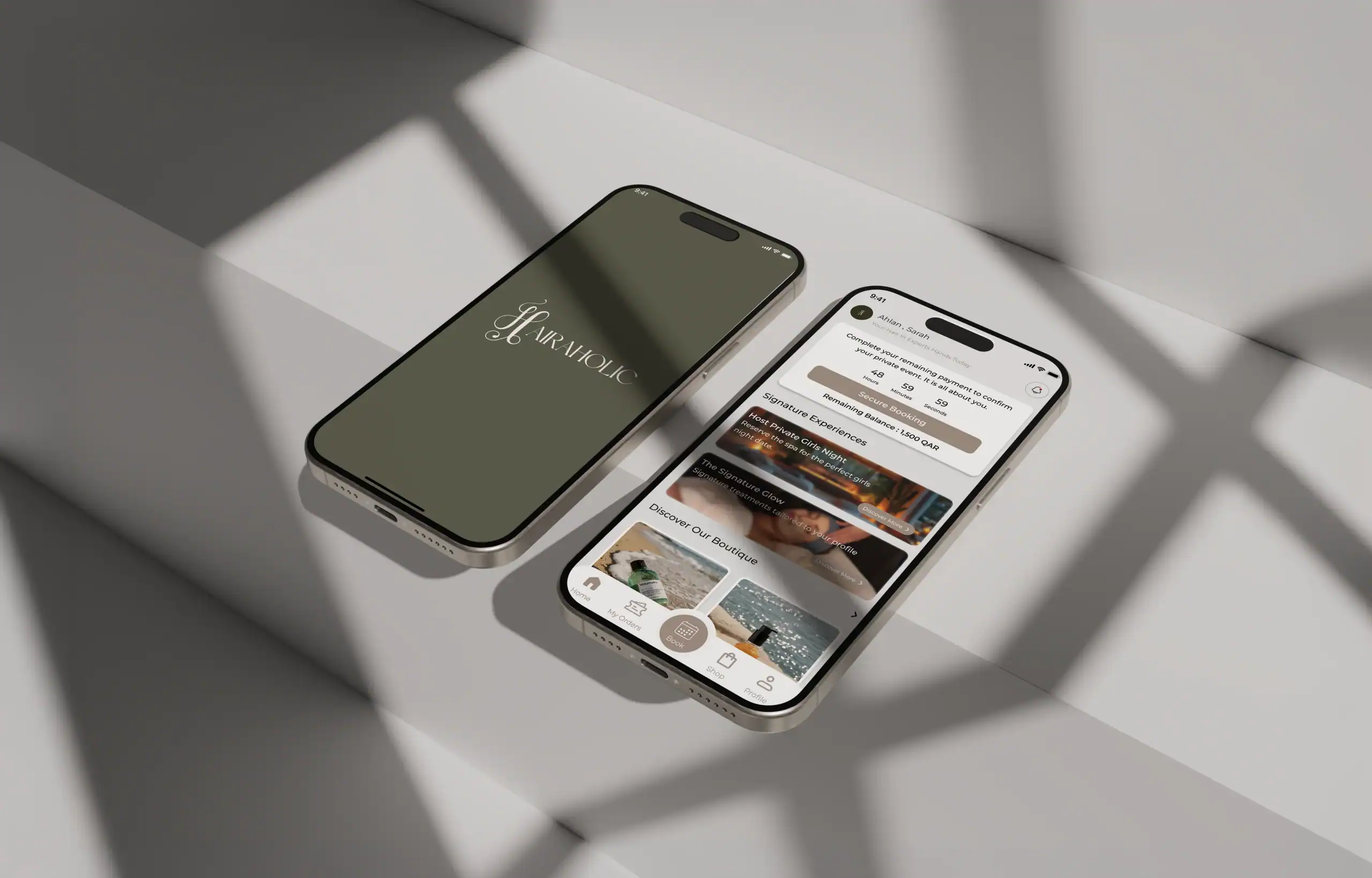
For consumer apps that need to reach everyone quickly, sharing a codebase across iOS and Android is often the smarter path. Our Hairaholic booking app and Heronys valet platform both ship to iOS, Android and an admin dashboard, giving their businesses full coverage without building and maintaining two entirely separate products.
Where does the web still fit best?
Not everything belongs in an app store. The management dashboards behind platforms like Xionys and LKH live on the web, where there is nothing to install, complex data has room to breathe on a large screen, and updates reach every user instantly. Often the best answer is a mix — a native or cross-platform app for the field, a web dashboard for the office.
How do we choose for each client?
We match the technology to the goal, the users and the context — a consumer in Doha tapping through a booking flow has very different needs from an inspector on a European production line. That judgement, earned across years of delivery, is what we bring to every build. If you are weighing native, web or hybrid for your product, let’s talk it through: [email protected].
How much does each approach cost in Qatar?
Budget is usually the deciding factor, so here are the typical ranges we quote at Hirodots for projects in Qatar, consistent with our full 2026 app development cost guide. All figures cover design, development, testing and launch of a bilingual Arabic–English product.
| Approach | Simple project | Mid-complexity | Typical timeline | Best for |
|---|---|---|---|---|
| Web app / PWA | QAR 35,000–80,000 | QAR 80,000–160,000 | 1–3 months | Dashboards, portals, widest reach at lowest cost |
| Cross-platform (Flutter / React Native) | QAR 55,000–110,000 | QAR 120,000–250,000 | 2–6 months | Booking, e-commerce, delivery and most business apps |
| Native (Swift / Kotlin) | QAR 90,000–180,000 | QAR 180,000–400,000 | 3–6+ months | Hardware-intensive, AR/VR, graphics-heavy apps |
Which approach should you choose?
After years of delivery across Qatar and the GCC, our decision rule is simple:
- Choose a web app or PWA if your users are mainly on desktop, you need something live in weeks, or the budget is under QAR 80,000 — you can always add a mobile app later.
- Choose cross-platform if you need a real app in both stores with accounts, payments and notifications — 80% of the apps we build in Qatar fit here, including Hairaholic and the Al Gharafa bakery app.
- Choose native if the app leans on device hardware, background services or heavy graphics — like SKODA iMDES, the factory-floor tool we built natively for Skoda Auto.
Unsure where your idea fits? Start small: our guide on going from concept to MVP shows how to validate before committing a full budget, or talk to our team in Lusail for a free scoping session.
Frequently asked questions
Which is cheaper: native, cross-platform or a web app?
A web app (PWA) is cheapest, from around QAR 35,000 for a simple product. Cross-platform apps run QAR 55,000–110,000 for a simple app — about 30–40% less than native, which starts at QAR 90,000–180,000 because iOS and Android are built separately.
Is Flutter or React Native better for apps in Qatar?
Both are proven. We often recommend Flutter for Qatar projects because its right-to-left (RTL) and Arabic typography support is excellent out of the box, which matters for the bilingual Arabic–English apps most Qatari businesses need. React Native is a strong choice when a web team already works in JavaScript.
Can a web app replace a mobile app?
For many businesses, yes. A progressive web app (PWA) installs from the browser, works offline and costs a fraction of a store app. The trade-offs are limited iOS push notifications and no app-store presence — if customers will search for you in the App Store, you still need a real app.
How long does cross-platform development take?
A simple cross-platform app takes about 2–3 months from design to launch; a mid-complexity app with accounts, payments and notifications takes 3–6 months. Because one codebase ships to both stores, cross-platform is typically 30–50% faster than building native iOS and Android in parallel.
Do cross-platform apps fully support Arabic?
Yes. Flutter and React Native both support right-to-left layouts and Arabic fonts natively, and every app we ship in Qatar is built bilingual Arabic–English as standard — the same codebase serves both languages.
